A Poet
$11.50

Dir. Naruse Mikio
1951, Japan, 97 min
Japanese with English subtitles
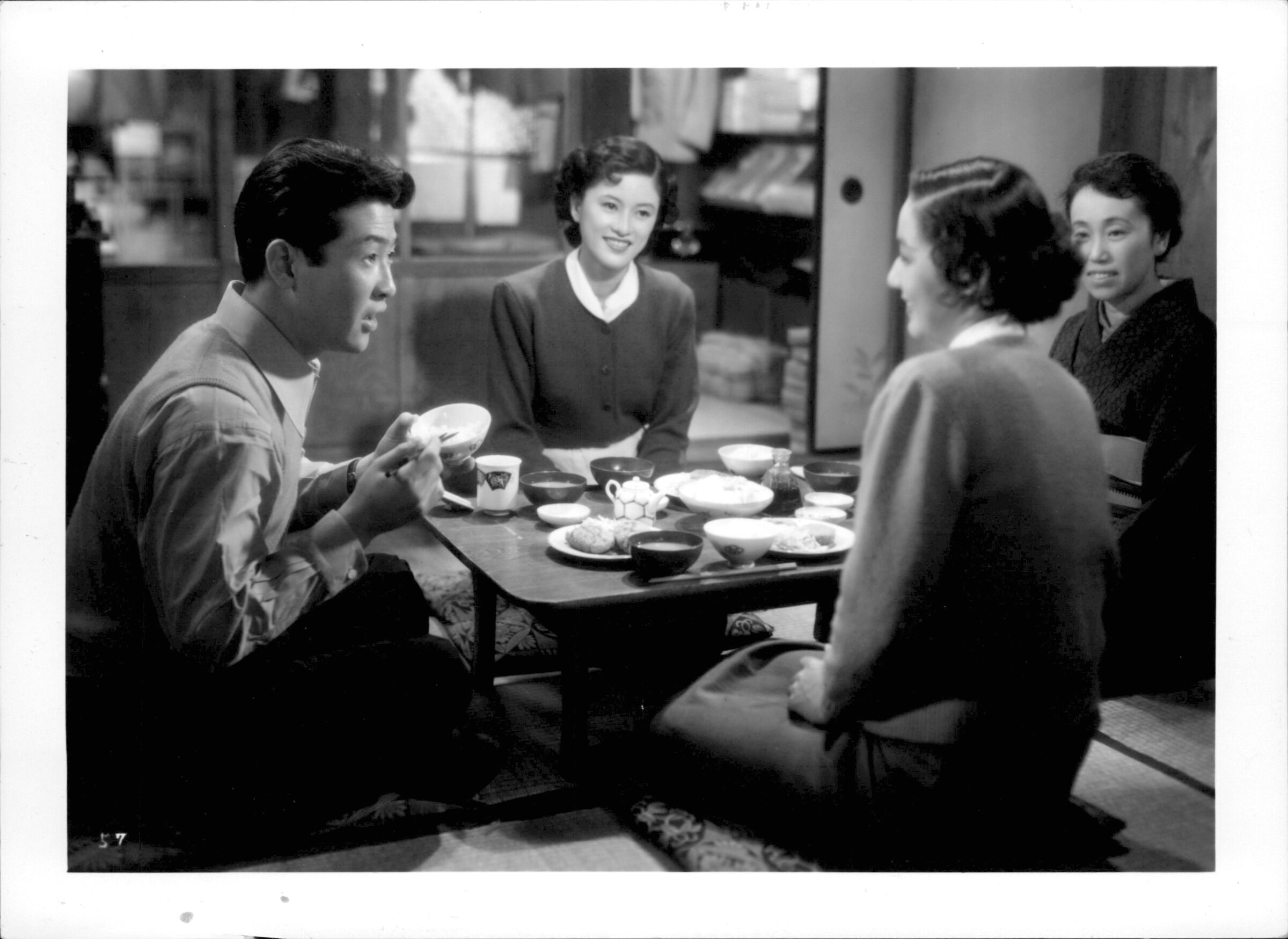
Okamoto Hatsunosuke and his wife, Michiyo, have moved from Tokyo to a small house in a modest neighborhood in Osaka. They married for love, but their romance has faded and they are approaching middle age. Michiyo has grown increasingly dissatisfied with her life since she has no children to care for. Hatsunosuke works for a securities firm, but the company is so small that he has no real chance for promotion. As a result of these frustrations, Michiyo nags Hatsunosuke while he remains aloof in an effort to avoid a serious confrontation. When Hatsunosuke’s niece, Satoko, runs away from her home in Tokyo and arrives at their doorstep, real problems arise. (The Japan Foundation)
Generously supported by the Japan Foundation, Toronto. 35mm prints are provided by the Film Library of the Japan Foundation’s Tokyo headquarters.

Naruse Mikio (1905–1969) was one of Japan’s most acclaimed filmmakers, celebrated for his understated yet emotionally powerful portraits of everyday life. Beginning his career at Shochiku studios in the silent era, Naruse directed more than 80 films over four decades. Though many of his earliest films have been lost, Naruse’s surviving works reveal a filmmaker of immense sensitivity, able to capture the complexities of ordinary life with striking emotional depth.
Naruse is often mentioned alongside Ozu Yasujiro and Mizoguchi Kenji as one of the giants of Japan’s classical cinema. What makes his films distinctive is their focus on everyday struggles—especially the resilience of women facing hardship, change, and uncertain futures. His postwar works, including Repast (1951), Floating Clouds (1955), and When a Woman Ascends the Stairs (1960), are especially admired for their intimate storytelling and quietly devastating emotional impact.
His understated style—natural performances, simple yet elegant camerawork, and a tone of bittersweet melancholy—captures the drama of ordinary lives in a way that still resonates today. More than fifty years after his passing, his films continue to move audiences worldwide with their honesty, compassion, and timeless insight into the human condition. This program, which brings together six 35 mm prints courtesy of the Japan Foundation, offers a rare opportunity to immerse yourself in this remarkable body of work on the big screen. (The Japan Foundation)